
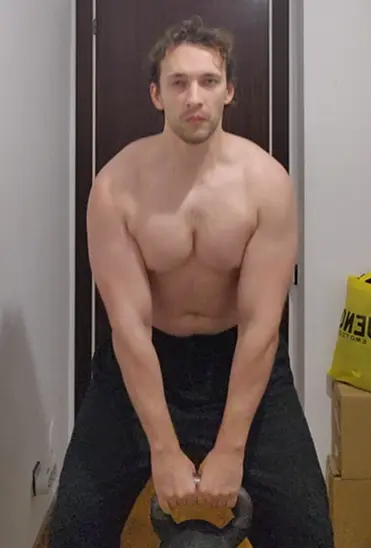
I remember struggling to generate power in my kicks, feeling like I was missing a crucial link in my kinetic chain. Then I discovered the kettlebell, and everything changed. This cannonball with a handle isn’t just a trendy fitness gimmick, it’s a versatile tool that can significantly enhance your martial arts performance and overall fitness all in the comfort of your own home.
In this article, I’ll share how kettlebells have played the crucial part in my home training with minimal equipment and transformed my body, offering guidance for beginners and seasoned martial artists alike.
Why Kettlebells for Martial Arts?
Kettlebells offer a unique blend of strength, power, endurance, and mobility, making them exceptionally well-suited for martial arts training. Here’s what sets them apart:
- Full-Body Engagement: Unlike isolation exercises, kettlebell movements like swings and cleans engage multiple muscle groups simultaneously. This mimics the dynamic, full-body movements required in martial arts, promoting functional strength and coordination.
- Power Development: The ballistic nature of kettlebell exercises trains your body to generate force quickly and efficiently—a critical skill for powerful strikes, throws, and takedowns. This explosive power is crucial for generating speed and impact.
- Grip Strength and Forearm Endurance: Kettlebells strengthen your grip and forearms, essential for grappling, clinching, controlling an opponent, and maintaining a strong hold on weapons.
- Core Stability and Strength: Many kettlebell movements demand significant core engagement, building the foundation for generating power in martial arts techniques, maintaining balance, and resisting takedowns.
- Improved Mobility and Flexibility: Exercises like swings and snatches enhance hip mobility and flexibility, vital for maintaining a strong stance, delivering powerful kicks, and preventing injuries.
For the Absolute Beginner (and Why You Might Start with Dumbbells)
If you’re new to strength training, kettlebells can seem intimidating. However, they offer incredible benefits for beginners when approached with the right mindset and exercises. Starting slow and focusing on form can help you build strength, coordination, and endurance effectively.
If you are completely new to resistance training, starting with dumbbells can be a great way to build confidence and basic strength. Dumbbells offer more stability, allowing you to focus on proper form for basic movements. Exercises like dumbbell rows, bench presses, and squats help develop a solid foundation. Once you’re comfortable with these foundational movements, transitioning to kettlebells unlocks their dynamic benefits and makes their use much safer. I learned this firsthand. I pulled a shoulder muscle early in my kettlebell journey because I jumped in too quickly – a mistake I want to help you avoid.

Here are a few beginner-friendly dumbbell exercises to get you started:
- Dumbbell Rows: These work your back muscles and improve pulling strength, which is essential for grappling and takedowns.
- Dumbbell Bench Press: This targets your chest, shoulders, and triceps, building pushing strength crucial for punches and takedowns.
- Dumbbell Squats: These strengthen your legs and core, providing a solid base for kicks and other lower body movements.
- Dumbbell Bicep Curls and Tricep Extensions: These exercises help build arm strength, which is important for both striking and grappling.
Best Kettlebell Exercises for Martial Artists
Once you’ve built a foundation with dumbbells, or if you’re already comfortable with basic strength training, these kettlebell exercises are excellent for martial arts training:
- Kettlebell Swings: Kettlebell swings are fantastic for developing explosive hip power, engaging your glutes, hamstrings, lower back, and core, which is essential for powerful kicks and strikes. They also provide a great cardiovascular workout. My beginner tip: Start with a lighter weight to master the hip-hinge movement before increasing the load. Common Mistake: Rounding the back. This can lead to lower back pain. Keep your back straight and hinge at the hips.
- Kettlebell Goblet Squats: Kettlebell goblet squats strengthen your lower body, improve posture, and build core stability by engaging your quads, glutes, core, and shoulders. Holding the kettlebell close to your chest helps maintain balance and proper form. Common Mistake: Allowing the knees to cave inwards. Keep your knees tracking over your toes.
- Kettlebell Deadlifts: Kettlebell deadlifts build foundational strength and teach proper hip-hinge mechanics, working your glutes, hamstrings, lower back, and core. Keeping the kettlebell close to your body and engaging your core throughout the movement is crucial. Common Mistake: Using your back to lift the weight instead of hinging at the hips. This is a major cause of back injuries.
- Kettlebell Rows: Kettlebell rows strengthen pulling muscles essential for grappling and takedowns, targeting your upper back, lats, and biceps. Focus on maintaining a stable posture to avoid strain on your lower back. Common Mistake: Rotating the torso or using momentum to pull the weight. Keep your core engaged and pull the weight in a straight line.
- Kettlebell Halos: Kettlebell Halos became my secret weapon against shoulder stiffness and minor aches I developed from years of training. The simple act of circling a light kettlebell around my head dramatically improved my shoulder mobility. I found that I could throw overhand strikes with greater fluidity and less discomfort. It’s also a great warm-up for my shoulders before more intense workouts, improving shoulder mobility and stability, reducing injury risk and improving overhead movements crucial for many martial arts, by working your shoulders, traps, and core. Common Mistake: Using too much weight or swinging the kettlebell too quickly. This can strain the shoulder joint. Keep the movement slow and controlled.
My Kettlebell Journey
My kettlebell journey didn’t begin with visions of athletic glory. It began with frustration. My kicks lacked power, my core felt weak, and I knew I needed a way to supplement my martial arts training at home. The kettlebell, with its intimidating cannonball shape, presented a daunting challenge.
My first attempt at a swing was revealing. I remember feeling like I was about to launch the kettlebell through my living room window, my back rounded and unstable. It was clear I needed to ditch the ego and focus on the fundamentals. I devoured online resources, watched countless videos, and practiced the hip hinge with a lighter weight until it finally clicked.
There were clumsy reps, near misses with furniture, and moments of self-doubt. But with each session, I felt a growing sense of control and power, my swings became smoother, my snatches more explosive, and I developed a newfound connection to my body. The initial fear of the kettlebell transformed into respect, then into a deep appreciation for its transformative potential.

Mental Benefits of Kettlebell Training
Beyond the physical benefits, kettlebell training has had a profound impact on my mental game. The focused concentration required for complex movements like snatches and cleans has significantly improved my mental clarity and focus, directly translating to better performance on the mats. When I’m training martial arts, I find it easier to stay focused on my opponent’s movements, anticipate their attacks, and execute my techniques with precision.
The focused breathing and rhythmic movements can also have a meditative effect, clearing my mind of distractions and anxieties. Mastering kettlebell exercises requires dedication and the willingness to push through discomfort, building self-discipline and mental resilience. This resilience carries over into my martial arts training, helping me persevere through tough sessions. The sense of accomplishment after mastering a challenging exercise also boosts my confidence and self-belief, empowering me to take on new challenges both in training and in life.
How Kettlebells Improved My Martial Arts
Since incorporating kettlebells into my routine, I’ve noticed tangible improvements in my martial arts performance. My punches are more powerful, driven by stronger hips and core. My takedowns are more explosive, thanks to the increased power in my posterior chain. And I have more stamina for grappling, a direct result of the improved conditioning from exercises like swings and snatches. I feel more connected to my body, and my movements are more fluid and efficient.
Getting Started Safely
Prioritizing safety is paramount. Start with a light weight (8-12kg for most men, 4-8kg for most women, even lighter for younger or older individuals, or those recovering from injuries) and focus on mastering proper form. Learn from reputable resources or a qualified instructor, as incorrect form, especially with heavier weights, significantly increases the risk of injury. Only increase weight or intensity when your form is solid and you feel completely comfortable. Always warm up before training, incorporating mobility exercises like kettlebell halos.
Here’s some crucial advice:
- Start Light: This is absolutely essential, especially for beginners. Starting with too heavy a weight will almost guarantee poor form and increase your risk of injury. For most adult men new to kettlebells, an 8-12kg kettlebell is a good starting point. For women, a 4-8kg kettlebell is generally recommended. Younger individuals and older adults should consider even lighter weights to begin with, focusing solely on mastering the movement patterns.
- Focus on Form: Learn proper technique from a qualified instructor or reputable resources (videos, articles, etc.). This is paramount to avoiding injury. Common form mistakes become far more dangerous with heavier weights, so nailing the form with a lighter weight is crucial.
- Progress Gradually: Increase weight or intensity only when your form is solid and you feel comfortable. Don’t rush the process. It’s better to progress slowly and safely than to get injured and have to stop training altogether.
- Warm Up: Incorporate mobility exercises like kettlebell halos to prepare your body for training.
Kettlebells have become more than just a training tool, they’ve become a key to unlocking a new level of performance in my martial arts. It’s not just about building bigger muscles; it’s about forging functional strength, explosive power, and unwavering mental resilience, a body that moves with fluidity and purpose, ready for the challenges of combat.
I remember a specific sparring match where I faced a taller, stronger opponent who had always been a tough match. After consistently training with kettlebells, my kicks had a new snap, my takedowns were more explosive, and my improved stamina allowed me to stay in the game during the later rounds. That moment solidified the power of kettlebell training for me.
If you’re ready to experience a similar transformation, enhance your martial arts practice, improve your overall fitness, and forge a stronger, more resilient version of yourself, pick up a kettlebell, start light, focus on form, and be consistent. Begin your journey today.
It’s a journey worth taking.
Q&A about Kettlebell training at Home
- Q: I’m completely new to strength training. Should I start with kettlebells or dumbbells?
- A: If you’re brand new, dumbbells are generally recommended to build a foundation. They offer more stability and allow you to focus on proper form for basic movements. Once you have a good base, you can transition to kettlebells to take advantage of their unique benefits.
- Q: What are the main benefits of using kettlebells for martial arts training?
- A: Kettlebells excel at developing explosive power, grip strength, core stability, and functional fitness. Their dynamic movements translate well to the demands of martial arts, improving power in strikes, throws, and takedowns.
- Q: What are some good kettlebell exercises for martial artists?
- A: Key exercises include kettlebell swings (for hip power and conditioning), snatches (for full-body explosiveness and coordination), cleans (for power transfer), goblet squats (for lower body strength and stability), and halos (for shoulder mobility).
- Q: How often should I train with kettlebells to see improvements in my martial arts performance?
- A: 2-3 times per week is a good starting point. Focus on proper form and gradually increase the weight or volume as you get stronger. Remember to allow for adequate rest and recovery between sessions.
- Q: Are kettlebells dangerous?
- A: Like any exercise, kettlebell training carries a risk of injury if performed incorrectly. It’s crucial to learn proper technique from a qualified instructor or reputable resources before starting. Start with lighter weights and gradually progress as your form improves.
- Q: How do I choose the right kettlebell size, especially as a beginner, and does the type of kettlebell matter?
- A: Choosing the right kettlebell size is crucial for safety and effectiveness, especially when starting out. It depends on your strength level, the specific exercise, and even the type of kettlebell. Here’s a breakdown:
- Starting Weights (General Guidelines):
- Beginners (Men): 8-12kg (18-26lb) is a good starting point for exercises like swings and deadlifts. For other exercises like presses, rows, and halos, 4-8kg (9-18lb) is usually more appropriate.
- Beginners (Women): 4-8kg (9-18lb) is recommended for swings and deadlifts, while 2-4kg (4-9lb) is often better for other exercises.
- These are just guidelines. Younger individuals, older adults, or those with prior injuries should consider starting with even lighter weights to focus solely on mastering the movement patterns. The most important thing is to prioritize proper form over weight.
- Weight Progression: As you get stronger, you can gradually increase the weight. A good rule of thumb is to increase by 2-4kg (4-9lb) when you can comfortably perform all your sets and reps (e.g., 3 sets of 10-12 reps) with perfect form. If your form starts to break down, the weight is too heavy.
- Starting Weights (General Guidelines):
- A: Choosing the right kettlebell size is crucial for safety and effectiveness, especially when starting out. It depends on your strength level, the specific exercise, and even the type of kettlebell. Here’s a breakdown:
Leave a Reply