
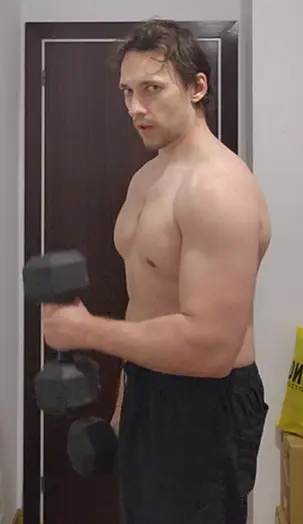
My first encounter with dumbbells was a comical disaster, a nine-year-old me trying to emulate my dad, nearly taking out a lamp in the process. My form was atrocious, a true baby giraffe attempting a squat. But that clumsy beginning sparked a journey that transformed my martial arts training. Dumbbells became a cornerstone of my progress, building the functional strength, explosive power, and injury resilience, the kind that translates to more powerful strikes and a reduced risk of injury, so vital for combat sports.
This isn’t about getting “swole,” though that’s a welcome bonus; it’s about unlocking your inner warrior through effective home training. So, if you’re wondering “should martial artists lift weights?” or “can you lift weights and practice martial arts?”. the answer is a resounding YES! And here’s why, along with a plan to get you started on your dumbbell workout at home.
Why Dumbbells for Martial Arts?
As you already know, I am a big fan of training with minimal equipment at home, as I can easily concentrate on every move and one of the biggest game-changers for me was discovering the power of unilateral training. In martial arts, we often favor one side, my right leg always led my kicks, and my right arm was my dominant striking limb. This led to imbalances. Dumbbells allowed me to address these imbalances directly, training each limb independently and building balanced strength.
Another key realization was the importance of range of motion. I used to think lifting heavy was all that mattered, but I was wrong. With dumbbells, I could explore a much greater range of motion compared to barbells or machines. Although I do love me some barbells as well, especially with more advanced movements.
But staying on topic, thanks to dumbbells I have not only improved my flexibility (essential for high kicks and complex grappling maneuvers) but also helped bulletproof my joints against injury. I found that my kicks had more snap and my movement felt more fluid. This is especially useful for calisthenics; as my strength increased, I could do more complicated exercises. It all works together.
And let’s not forget the core! Many dumbbell exercises require significant core engagement to stabilize the weight. This translated directly to more powerful strikes and a more solid base for takedowns and throws. I remember struggling to maintain balance during certain grappling exchanges. After incorporating dumbbell work, my core stability improved dramatically, making me much harder to sweep or throw.
Beginner’s Dumbbell Home Workout Plan: From Zero to Hero
This dumbbell workout plan is designed to progress you from a beginner to a more advanced level, focusing on full-body strength and power. I tested these exercises myself and continue to use them regularly. Remember, proper form is paramount. If you’re unsure about any exercise, consult a qualified fitness professional or watch reputable instructional videos. Start light, and gradually increase the weight as you get stronger. This is how I started; I was very weak and couldn’t even do 5 pushups, but with time, I started doing more and more, and I’m still improving. I’ve broken down the progression into phases to make it easy to follow. A common question I get is about training space. The great thing about dumbbells is that you don’t need a huge gym. I’ve trained in cramped apartments and hotel rooms with just a few pairs. This dumbbell workout at home plan is designed with that in mind, focusing on compound movements that give you maximum results with minimal space.
Starting Weights and Progression
Choosing the right starting weight for your dumbbell workout at home is crucial. Here’s a general guideline, but remember to prioritize proper form above all else:
- Beginner (0-3 months of consistent training):
- Men: 6-10kg (13-22lbs) for compound exercises (squats, rows, presses), 2-5kg (4-11lbs) for isolation exercises (curls, extensions).
- Women: 2-5kg (4-11lbs) for compound exercises, 1-3kg (2-7lbs) for isolation exercises.
- Intermediate (3-6 months of consistent training): Adjust based on beginner strength gains, increasing by 1-2kg (2-4lbs) when you can comfortably perform all sets and reps with good form for two consecutive workouts.
- Advanced (6+ months of consistent training): Focus on progressive overload, continually challenging yourself with heavier weights or more challenging variations.
Phase 1: Building a Foundation (Weeks 1-4)
This phase focuses on learning proper form and building a base level of strength. Perform this routine 2-3 times per week, with at least one day of rest between workouts.
Exercise | Sets | Reps | Focus
- Dumbbell Squats | 3 | 10-12| Legs, glutes, core
- Dumbbell Rows | 3 | 10-12| Back, biceps
- Dumbbell Bench Press | 3 | 10-12| Chest, shoulders, triceps
- Dumbbell Overhead Press | 3 | 10-12 | Shoulders, triceps
- Dumbbell Bicep Curls | 2 | 10-12 | Biceps
- Dumbbell Triceps Extensions | 2 | 10-12 | Triceps
Phase 2: Building Strength and Power (Weeks 5-8)
This phase focuses on increasing strength and power. Perform this routine 2-3 times per week, with at least one day of rest between workouts. Increase the weight slightly if possible.
Exercise | Sets | Reps | Focus
- Dumbbell Goblet Squats | 3 | 8-10 | Legs, glutes, core (increased core activation)
- Dumbbell Romanian Deadlifts (RDLs) | 3 | 8-10 | Hamstrings, glutes (explosive hip movements)
- Incline Dumbbell Press | 3 | 8-10 | Upper chest, shoulders | | Dumbbell Clean and Press | 3 | 6-8 | Full body (explosive power)
- Dumbbell Hammer Curls | 2 | 8-10 | Forearm and grip strength
- Dumbbell Overhead Triceps Extension | 2 | 8-10 | Tricep strength for powerful punches
Phase 3: Building Explosive Power and Endurance (Weeks 9+)
This phase focuses on developing explosive power and muscular endurance. Perform this routine 2-3 times per week, with at least one day of rest between workouts. You can incorporate plyometric exercises (like jump squats or plyometric push-ups) into this phase.
Exercise | Sets | Reps | Focus
- Dumbbell Jump Squats | 3 | 6-8 | Legs, glutes, core (explosive power)
- Dumbbell Swings | 3 | 10-15| Posterior chain (explosive hip extension)
- Dumbbell Push Press | 3 | 6-8 | Shoulders, triceps (explosive power)
- Dumbbell Renegade Rows | 3 | 6-8 | Core stability and back strength
- Dumbbell Concentration Curls | 2 | 10-12 | Bicep peak and strength for pulling
- Dumbbell Skullcrushers | 2 | 10-12 | Tricep strength for powerful strikes
My Personal “Aha!” Moment
I remember when I first started incorporating dumbbell RDLs into my routine. My kicks suddenly felt snappier and more powerful. It was like I had finally unlocked another missing link in my kinetic chain. This is just one example of how a dumbbell full body workout can directly translate to improved martial arts performance. I also noticed significant improvements in my muscle mass and hypertrophy, which contributed to greater force production in my strikes, my punches became more powerful, and my kicks had more impact.
After you get well acquainted with dumbbells, I would also suggest getting a kettlebell, as it offers a more dynamic approach to your strength and martial arts training at home. It’s a very affordable and versatile piece of equipment that allows you to perform more dynamic exercises, testing your stabilizing muscles more effectively. Kettlebell training can enhance your functional strength and add a new dimension to your workout, further improving your martial arts performance.
Also, Stretching after weight training is crucial, especially for martial artists. It helps maintain muscle elasticity, preventing rigidity that can hinder performance and increase injury risk. This post-workout practice is a key investment in long-term joint health and injury prevention, ensuring your muscles remain supple and responsive for both training and everyday life.
Getting back to the topic of dumbbells, I feel its also important to mention that even my calisthenics benefited, I found I could perform more reps and more challenging variations of exercises like pull-ups and dips. I also get asked a lot about getting bulky and losing speed. I used to have that same fear, but by focusing on functional exercises and maintaining my flexibility training, I became stronger, faster, and more agile, not bulky nor rigid.

Efficient Training: Less Time, More Results
To train efficiently at home, just remember these time tested key points:
- Warm-up: Start with 5-10 minutes of light cardio, such as jumping jacks or jogging in place, followed by dynamic stretches like arm circles, leg swings, and torso twists.
- Proper Form: Proper form is more important than lifting heavy weight.
- Progressive Overload: A common method is to increase the weight by 2.5-5 pounds (1-2 kg) when you can comfortably perform all sets and reps with good form for two consecutive workouts. Another option is to add an extra set or increase the reps within each set.
- Listen to Your Body: Rest and recover when needed. Don’t push through pain.
- Consistency is Key: The most important thing is to be consistent with your training. Even short, regular workouts are more effective than sporadic long ones.
So, ditch the excuses and grab those dumbbells. With this structured plan and a little dedication, you can transform your home into your own personal dojo and forge a stronger, more resilient version of yourself. It won’t be as dramatic as a movie montage (unless you really crank up the music), but the results will speak for themselves. Start today, and unleash your inner warrior at home!
Q&A
- Q: I’m completely new to weight training. Is it safe to start with dumbbells at home, or should I go to a gym first?
- A: Starting with dumbbells at home is safe if you prioritize proper form and start light. I did it myself, making some early mistakes with form, but learning quickly. While gyms offer more equipment and potential guidance, it’s not essential for beginners. Focus on mastering movements through reputable videos and start with lighter weights than you think you need to avoid injury.
- Q: I practice [Specific Martial Art]. How will dumbbell training specifically improve my performance?
- A: Dumbbells build functional strength directly applicable to martial arts. For Muay Thai, RDLs and goblet squats improve hip power for kicks; for Judo, rows and curls enhance grip for throws; for BJJ, renegade rows and squats build core stability for grappling. Unilateral dumbbell exercises also correct imbalances common in many martial arts.
- Q: I don’t have a lot of space at home. Can I still get a good workout with just dumbbells?
- A: Dumbbells are ideal for limited spaces. Focus on compound exercises like squats, rows, presses, and RDLs, which work multiple muscle groups efficiently. I’ve trained effectively in small apartments and even hotel rooms using just dumbbells. This dumbbell workout at home routine is designed with space limitations in mind.
- Q: I’m worried about getting “bulky” and losing flexibility. Will dumbbell training make me stiff and slow?
- A: Done correctly, dumbbell training enhances, not hinders, flexibility and speed. Focus on functional strength and power, not just muscle growth (hypertrophy), using moderate weights and explosive movements. Combine this with regular mobility work. I personally found that focusing on function over bulk made me faster and more agile.
- Q: What’s the biggest mistake beginners make when starting dumbbell training at home, and how can I avoid it?
- A: The biggest mistake is rushing: lifting too heavy too soon, neglecting form, and skipping warm-ups. Avoid this by starting light, prioritizing proper form (watch videos and get feedback if possible), and always warming up. I made these mistakes early on, resulting in a shoulder strain that taught me a valuable lesson about the importance of patience and proper technique when starting a new dumbbell workout plan.
Leave a Reply