
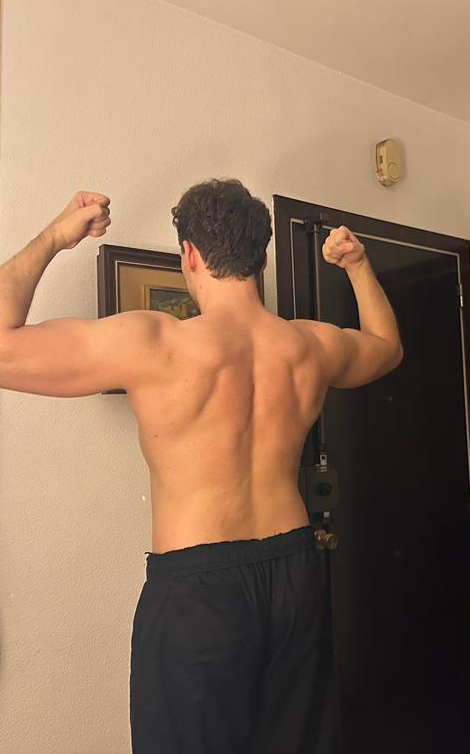
My journey into calisthenics was a bit unconventional, to say the least. I started with what I had: an 8-liter water bottle filled to the brim. Let me tell you, those early days were a humbling experience. Attempting a squat with that behemoth of a water bottle felt like trying to wrestle a small child. I stumbled, I swayed, and I almost dropped it on my foot more times than I care to admit. But I persisted. I focused on proper form, gradually increasing the number of repetitions, and slowly but surely, I started to see results.
Then came the resistance bands. Oh, the resistance bands! I remember the day I first encountered these magical pieces of rubber. It was like discovering a secret weapon. They were affordable, portable, and incredibly versatile. I started with basic exercises, feeling a bit like a human rubber band myself. But with consistent practice, I began to see a noticeable difference in my strength, speed, and endurance.
Here is the example of a simple workout that you can start at home with minimal equipment. The exercises are basic, the items are easy to get (most likely you already have them home), and you can start practicing anytime!
Training with Minimal Equipment
Let’s be honest, sometimes getting to the gym feels like a Herculean task. Between work, family, and the sheer exhaustion that comes with a demanding training schedule, finding the time and motivation to hit the gym can feel like an insurmountable obstacle. But fear not, fellow martial artists! You don’t need a fancy gym membership or a mountain of expensive equipment to achieve your training goals. With a bit of creativity and a few essential pieces of gear, you can transform your home into a fully functional martial arts training ground.
Remember those early days, when I first started exploring home training? I was convinced I needed a full-fledged home gym to make any real progress. I envisioned a space overflowing with dumbbells, barbells, and fancy machines. Thankfully, I quickly realized that true martial arts training isn’t about the bells and whistles; it’s about discipline, dedication, and finding creative ways to push your limits.
The Unsung Heroes of Home Training
Yes, they are the Water Bottles and Resistance Bands, and yes, you heard me right. A perfect and cost effective way to train, especially for martial art beginners and newcomers to the world of home workouts.

Let’s talk about some of my favorite unsung heroes of home training:
- The Humble 8-Liter Water Bottle: Now, you might be thinking, “Water bottles? For martial arts?” Hear me out. These seemingly innocuous vessels can be surprisingly versatile training tools. Filled with water, they become makeshift kettlebells, adding an extra challenge to exercises like squats, lunges, and rows. I remember those early days, struggling to even lift a full water bottle overhead. I felt like a complete novice, but with consistent practice, I saw significant improvements in my strength and endurance.
- The Magic of Resistance Bands: Ah, resistance bands. These unsung heroes of home training deserve a standing ovation. These versatile pieces of equipment provide constant tension, forcing you to engage your muscles throughout the entire range of motion. I can honestly say that resistance bands have been a game-changer for me. They’ve helped me sculpt my physique, increase my speed and strength, and build incredible endurance.
- Strength Training with Resistance Bands: Resistance bands can be used for a wide variety of exercises, from bicep curls and tricep extensions to squats and rows. The constant tension provides a challenging workout that targets all major muscle groups. I’ve even incorporated resistance band exercises into my shadowboxing routine, improving my punching speed and power.
- Speed and Power Training with Resistance Bands: Resistance band pulls and punches are fantastic for developing explosive power. The constant resistance forces you to generate more power with each movement, translating directly to increased striking speed and power in your martial arts training.
- Endurance Training with Resistance Bands: The constant tension provided by resistance bands forces you to engage your muscles throughout the entire range of motion, increasing time under tension and improving your muscular endurance. This is crucial for maintaining a high level of intensity during sparring sessions and grappling exchanges.
The example below is basic exercises combined with simple martial arts kicking drills.
Expanding Your Home Gym Arsenal
While water bottles and resistance bands are fantastic for home training, there are a few other pieces of equipment that can significantly enhance your martial arts journey:
- Hand Grippers: These small but mighty tools are excellent for strengthening your grip and forearms, which is crucial for grappling and improving punching power.
- Wrist and Ankle Weights: Adding weight to your wrists and ankles can increase the intensity of your cardio workouts, such as jumping jacks, burpees, and shadowboxing.
- Push-up Stands: Push-up stands elevate your hands, increasing the range of motion and targeting your chest and shoulders more effectively.
- Jump Rope: A classic for a reason! Jumping rope is an excellent cardio workout that improves coordination, agility, and footwork.
- Yoga Mat: A yoga mat provides a comfortable and supportive surface for stretching, core work, and floor exercises.
- Focus Pads: If you have a training partner, focus pads are invaluable for improving your striking accuracy, speed, and timing.
- Dumbbells: Dumbbells are versatile for strength training at home, allowing for a wide range of exercises that target various muscle groups, such as bicep curls, shoulder presses, and lunges.
- Kettlebells: Kettlebells are ideal for dynamic strength and conditioning exercises, like swings and snatches, that engage multiple muscle groups and improve functional strength and endurance.
Building Your Home Training Arsenal:
- Start Small: Don’t feel pressured to buy a ton of expensive equipment. Start with a few basic items like resistance bands, a jump rope, and a yoga mat. You can gradually add more equipment as your needs and budget allow.
- Get Creative: Utilize everyday objects for your training. Chairs can be used for tricep dips, stairs can be used for step-ups, and even a sturdy tree branch can be used for pull-ups.
- Consistency is Key: The key to success is consistency. Even 15-20 minutes of dedicated training at home a few times a week can make a significant difference.
- Make it Fun: Find ways to make your home workouts enjoyable. Put on some upbeat music, listen to a podcast, or train with a friend to keep yourself motivated.
Beyond the Equipment:
Remember, the most important piece of equipment is your mind. Discipline, dedication, and a positive attitude are crucial for achieving your training goals.
Building a home training setup doesn’t require a massive investment or a dedicated home gym. With a bit of creativity and a few essential pieces of equipment, you can transform your living room into a powerful training ground. So, embrace the challenge, unleash your inner warrior, and discover the incredible results you can achieve with consistent home training.
Q&A: Minimal Equipment Training
- Q: Why train with minimal equipment?
- A: Minimal equipment training is convenient, affordable, and accessible. It allows you to train anywhere, anytime, without needing a gym membership or expensive equipment. It’s perfect for home workouts, travel, or when you have limited resources.
- Q: Can I really get a good workout with just my bodyweight and household items?
- A: Absolutely! Bodyweight exercises are incredibly effective for building strength, endurance, and flexibility. When combined with creative use of household items, you can create challenging and varied workouts.
- Q: Is minimal equipment training suitable for all fitness levels?
- A: Yes. Exercises can be modified to suit different fitness levels, from beginners to advanced trainees. You can adjust the difficulty by changing the number of repetitions, sets, or the intensity of the exercise.
Using Bodyweight for Training:
- Q: What are some effective bodyweight exercises I can do at home?
- A: Some excellent bodyweight exercises include:
- Strength: Push-ups, squats, lunges, planks, dips (using a chair or sturdy surface), burpees.
- Cardio: Jumping jacks, high knees, mountain climbers, burpees.
- Flexibility: Static stretches, dynamic stretches, yoga poses.
- A: Some excellent bodyweight exercises include:
- Q: How can I progress with bodyweight exercises as I get stronger?
- A: You can progress by:
- Increasing the number of repetitions or sets.
- Slowing down the tempo of the exercise.
- Adding variations (e.g., incline push-ups, pistol squats).
- Adding pauses or holds during the exercise.
- A: You can progress by:
Using Household Items for Training:
- Q: What household items can I use for training?
- A: Many common items can be repurposed for workouts:
- Chairs: Dips, incline push-ups, step-ups.
- Towels: Resistance exercises, stretching.
- Water Bottles/Milk Jugs: Weights for exercises like bicep curls, overhead presses, or squats.
- Bags (filled with books or other heavy items): Weights for squats, lunges, or rows.
- Stairs/Steps: Step-ups, cardio intervals.
- Walls: Handstand push-up progressions, stretching.
- A: Many common items can be repurposed for workouts:
- Q: How can I use resistance bands effectively at home?
- A: Resistance bands are versatile and can be used for a wide range of exercises, including:
- Strength: Bicep curls, triceps extensions, rows, squats, lateral walks.
- Rehabilitation/Prehabilitation: Shoulder rotations, rotator cuff exercises.
- A: Resistance bands are versatile and can be used for a wide range of exercises, including:
- Q: Are there any safety precautions I should take when using household items for training?
- A: Yes. Ensure the items you use are sturdy and stable. Avoid using unstable furniture or items that could break or tip over. Start with lighter weights and gradually increase the resistance as you get stronger. Always prioritize proper form over lifting heavy weights.
Creating a Home Training Program:
- Q: How can I stay motivated when training at home with minimal equipment?
- A: Set realistic goals, track your progress, find online communities or resources for support, and vary your workouts to keep things interesting.
- Q: How do I create a workout routine using minimal equipment?
- A: Start by identifying your fitness goals (strength, cardio, flexibility). Choose exercises that target the muscle groups you want to work on. Create a weekly schedule that includes rest days for recovery.
- Q: How often should I train with minimal equipment?
- A: Aim for 3-5 workouts per week, allowing for rest days in between. Listen to your body and adjust the frequency and intensity as needed.