
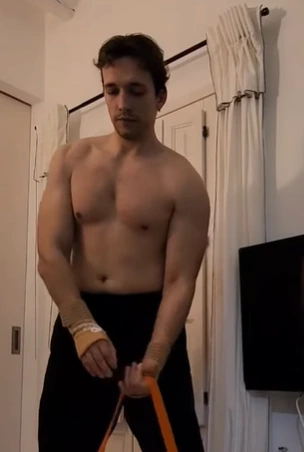
So, you’re ready to trade the gym’s fluorescent lights and echoing clangs for the cozy confines of your own home? Excellent choice! Whether you’re a seasoned fitness enthusiast or a complete beginner just dipping your toes into the world of exercise, this guide will be your all-access pass to creating your own killer home training program.
I have over 20 years of experience in various forms of martial arts, and I have also spend a lot of time solo training, especially these days as I ma getting back in shape as well.
In this article, explore the best home workout equipment for those who crave a little extra resistance, delve into effective home training exercises that require nothing but your own bodyweight, and finally answer the burning question: what are the absolute best exercises at home to get you results? And because no training journey is complete without a few comical mishaps, I’ll share some of my own home workout blunders, because if I have to endure the occasional awkward moment, you’re coming along for the ride.
The Strategic Advantages of Sweating at Home
As I have previously said. while commercial gyms boast an impressive arsenal of equipment, home workouts offer unique perks that shouldn’t be dismissed. Consider the sheer convenience, for instance. Imagine no more battling rush hour traffic, no more waiting impatiently for the squat rack, and no more feeling self-conscious under the watchful eyes of seasoned lifters. Your home becomes your personal fitness sanctuary, a space where you can train whenever the mood strikes, whether it’s at the crack of dawn or late at night. This unparalleled convenience fosters consistency, which is the true key to achieving lasting fitness results. Then there’s the budget-friendly aspect.
Forget shelling out a hefty monthly fee for a gym membership you might barely use. Home workouts can be incredibly effective with minimal or even no equipment, freeing up your hard-earned cash for things like nutritious groceries, recovery tools, or perhaps even a new pair of workout shoes (because let’s be honest, those old ones are starting to develop a personality of their own). Finally, home training often naturally leads to a greater emphasis on bodyweight exercises. These exercises, which utilize your own body weight as resistance, are the fundamental building blocks of strength and fitness. Mastering these movements not only builds a solid foundation for any training program but also improves functional strength that translates to everyday activities.
Creating your training space
Transforming your living space into a functional workout zone doesn’t require a complete home makeover. A clear space roughly the size of a standard yoga mat (about 6×6 feet) is usually sufficient. Before you begin, a quick decluttering mission is in order. This is paramount. You absolutely do not want to recreate my infamous incident involving a rogue dumbbell and my grandmother’s delicate porcelain cat collection. The aftermath was… let’s just say it involved a lot of sweeping and a very strained conversation about the importance of spatial awareness during exercise. Once you’ve cleared the area, consider your footing. A stable, non-slip surface is essential for preventing slips, trips, and potentially embarrassing falls. The non-slip surface and extra space for movement are especially important if you are also planning to start practicing martial arts at home. A yoga mat, an exercise mat, or even a thick rug can provide the necessary traction for most exercises.
Time proven and effective Home Training Exercises
Now, let’s get to the heart of the matter, the exercises themselves. We’ll explore effective home training exercises, both with and without equipment. When it comes to effective training without equipment, your own body becomes your gym. Certain exercises stand out for their ability to deliver results. Take push-ups, for example. A true classic for a reason, push-ups effectively target your chest, shoulders, and triceps.
By simply adjusting your hand placement, wider for more chest emphasis, closer for more triceps work, diamond for a greater challenge, you can effectively target different muscle fibers and keep your workouts engaging. I used to struggle to do even five proper push-ups. But with consistent practice, I eventually progressed to actual, respectable push-ups. It’s a testament to the power of perseverance (and perhaps a slightly less wobbly core). Squats are another essential movement. Often dubbed the “king” of leg exercises, squats work your quads, glutes, and hamstrings, building lower body strength and power.
Starting with bodyweight squats is an excellent way to learn proper form. As you progress, you can explore variations like jump squats for explosive power, pistol squats for advanced strength and balance, or holding a weighted object like a sturdy backpack for added resistance. I once attempted weighted squats using a precarious stack of encyclopedias. The result was less “gains” and more “literary avalanche.” Lunges are also valuable. However, don’t neglect stretching! It plays a crucial role in injury prevention and overall fitness, especially if you’re involved in demanding activities like martial arts or gymnastics. Incorporating regular stretching into your routine will help maintain flexibility, improve range of motion, and support long-term physical health.
Another excellent lower body exercise that also challenges your balance and coordination. Forward lunges, reverse lunges, and lateral lunges each offer unique benefits, targeting different muscle groups and improving stability. Don’t forget the core! Planks are a highly effective core exercise that engages your abdominal muscles, back muscles, and shoulders, improving core stability and overall strength.
You can progress from standard planks to forearm planks, side planks, and even dynamic plank variations with leg or arm raises for an added challenge. Finally, for a real full-body challenge, there are burpees. This dynamic exercise combines a squat, push-up, and jump, providing a full-body workout that improves cardiovascular fitness, strength, and coordination.
While you can achieve great results with bodyweight training alone, certain pieces of equipment can enhance your home workouts and provide greater variety. Resistance bands are a fantastic investment for home training. These versatile bands provide resistance for a wide range of exercises, from bicep curls and triceps extensions to squats and lunges. They’re also incredibly portable and affordable, making them a perfect option for those with limited space or budget.
If you’re serious about adding more resistance to your workouts, adjustable dumbbells are a great option. They allow you to easily change the weight, making them suitable for a variety of exercises and fitness levels. A pull-up bar is also valuable if you have the space. A pull-up bar is a highly effective tool for building upper body strength, particularly your back and biceps. If you don’t have a doorway suitable for a pull-up bar, you can use resistance bands or other exercises like rows and inverted rows to target similar muscle groups. For a quick cardio boost, consider a jump rope. A jump rope is a simple yet incredibly effective tool for improving cardiovascular fitness, coordination, and agility. It’s also a great way to warm up before your workouts.
A Personalized Approach Crafting Your Home Training Program
And here we are, it is time to sit down, reflect on yourself, and to create your own personalized training program. Creating a home training program doesn’t have to be complicated. Here’s a simple step-by-step approach:
- Determine Your Fitness Goals: What do you want to achieve? Are you looking to build muscle, improve your cardiovascular fitness, increase your flexibility, or a combination of these? Having clear goals will help you design a program that’s tailored to your needs.
- Choose Your Exercises: Select exercises that target the muscle groups or fitness components you want to improve. If you’re focusing on building muscle, prioritize compound exercises like squats, push-ups, and lunges. If you’re focusing on cardiovascular fitness, include exercises like jumping jacks, burpees, and high knees.
- Determine Your Training Frequency: How many days per week can you realistically commit to working out? For beginners, 2-3 non-consecutive days are a good starting point. As you progress, you can increase the frequency to 4-5 days per week.
- Structure Your Workouts: There are several ways to structure your workouts:
- Full Body Workouts: These workouts target all major muscle groups in each session. They’re a great option for beginners and those who can only train a few days per week. Example: Squats, Push-ups, Lunges, Planks, Rows (with resistance bands or towels).
- Upper/Lower Body Split: This involves alternating between upper body workouts and lower body workouts. This allows you to focus more intensely on specific muscle groups and allows for more recovery time. Example: Day 1: Push-ups, Rows, Dips; Day 2: Squats, Lunges, Calf Raises.
- Apply Progressive Overload: This is the key to making continuous progress. Gradually increase the demands placed on your muscles over time by:
- Increasing Repetitions (Reps): Perform more reps of each exercise.
- Increasing Sets: Perform more sets of each exercise.
- Increasing Resistance: Use resistance bands, weighted objects, or more challenging exercise variations.
- Decreasing Rest Time: Reduce the rest time between sets to increase the intensity of your workouts.
- Plan for Rest and Recovery: Rest is essential for muscle growth and preventing injuries. Schedule rest days into your program and ensure you’re getting enough sleep.
- Example Beginner Program (3 Days/Week, Full Body):
- Day 1: Squats (3 sets of 10-12 reps), Push-ups (3 sets of as many reps as possible), Plank (3 sets, holding for 30-60 seconds)
- Day 2: Rest
- Day 3: Lunges (3 sets of 10-12 reps per leg), Rows (using resistance bands or towels, 3 sets of 10-12 reps), Glute Bridges (3 sets of 15-20 reps)
- Day 4: Rest
Whether you prefer the simplicity of bodyweight exercises or the added resistance of equipment, there are countless ways to create a challenging and rewarding home training program. It’s also a great idea to incorporate basic cardio training into your home workouts.
Activities like shadow boxing, for example, not only provide a fantastic cardio workout but also enable you to practice basic strikes such as punching while effectively using those accumulated calories. So, clear some space, put on your workout gear, and transform your home into a powerful training ground. Just try to avoid any further encounters between dumbbells and porcelain cats.
Often Asked Questions
- Q: I’m a complete beginner. How do I create a home workout program?
- A: Start with 2-3 workouts per week, focusing on compound exercises (working multiple muscle groups). A simple beginner program could include: (Workout A: Squats, Push-ups, Planks) (Workout B: Lunges, Rows (using resistance bands or towels), Glute Bridges Perform 2-3 sets of 8-12 repetitions for each exercise.) Rest for 60-90 seconds between sets. Gradually increase the reps, sets, or difficulty of the exercises as you get stronger.
- Q: I don’t have any equipment. What are the most effective bodyweight exercises I can do?
- A: The most effective bodyweight exercises for building overall strength and fitness are: * Lower Body: Squats, Lunges, Glute Bridges, Calf Raises * Upper Body: Push-ups (various hand placements), Dips (using stable furniture), Plank variations * Core: Planks, Crunches, Russian Twists, Leg Raises These exercises target all major muscle groups and can be modified to increase difficulty as you progress.
- Q: What minimal equipment would you recommend for home workouts if I want to add resistance?
- A: If you’re looking to invest in minimal equipment to enhance your home workouts, I recommend: * Resistance Bands: These are versatile, affordable, and portable. They can be used for a wide range of exercises, providing resistance for strength training and assistance for exercises like pull-ups. * Adjustable Dumbbells (Optional): If your budget allows, adjustable dumbbells offer a significant increase in resistance and allow you to perform a greater variety of exercises. However, you can make significant progress with just resistance bands.
- Q: How often should I work out at home, and how do I structure my workouts?
- A: For beginners, 3-4 non-consecutive days of training per week is ideal. This allows for adequate rest and recovery between sessions. You can structure your workouts in a few ways: * Full Body: Work all major muscle groups in each workout (e.g., the beginner program in Q1). * Upper/Lower Split: Alternate between upper body workouts and lower body workouts. * Choose a structure that fits your schedule and preferences, but ensure you are allowing adequate rest between training days.
- Q: How can I apply progressive overload at home without weights?
- A: Even without traditional weights, you can apply progressive overload by: * Increasing Repetitions: Perform more reps of each exercise. * Increasing Sets: Perform more sets of each exercise. * Changing the Tempo: Slow down the eccentric (lowering) portion of the exercise. * Modifying the Exercise: Progress to more challenging variations of the exercise (e.g., incline push-ups to decline push-ups, bodyweight squats to jump squats). * Decreasing Rest Time: Reduce the rest time between sets to increase the intensity of the workout. * Using Resistance Bands: Resistance bands provide increasing resistance as they are stretched, allowing for progressive overload.
Leave a Reply