
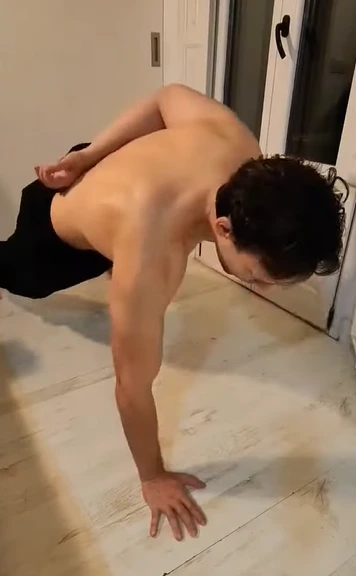
Ever watched someone perform a seemingly impossible feat of strength and wondered how they did it? Maybe it’s a hundred push-ups, a perfect handstand, or a one-arm pull-up. While raw talent and dedicated training play a role, there’s a sneaky little training method that often gets overlooked: greasing the groove (GTG).
As a martial artist with 20 years of experience, primarily in Chinese martial arts like Mizongquan and Baguazhang, I’ve always sought effective ways to enhance my physical capabilities. For the past two years, I’ve been incorporating calisthenics into my training regimen, and the results have been remarkable. I’m excited to share my insights and help others achieve similar success using the powerful method of greasing the groove.
What is Greasing the Groove?
Greasing the groove (GTG) is a training philosophy that focuses on practicing a movement frequently throughout the day, but with low intensity. Think of it like this: you’re not trying to max out your muscles every time; you’re simply reinforcing the neural pathways that control the movement. You’re “greasing” the neurological “groove” that allows your brain to communicate with your muscles, making the movement smoother, more efficient, and ultimately stronger.
How does GTG work in practice?
Let’s say you want to improve your pull-ups. Instead of doing three sets of eight to failure, you might do five sets of two or three reps throughout the day, with plenty of rest in between. You’re never pushing yourself to exhaustion; you’re simply practicing the movement with perfect form.
A History of Frequent Repetition in Training
While the term “greasing the groove” is relatively recent, the underlying principle of frequent, submaximal practice has been employed by athletes, warriors, and performers for centuries. The idea of consistent repetition to improve skill and strength can be traced back to ancient training methodologies:
Ancient Greek Athletes
Olympic athletes in ancient Greece emphasized frequent practice and perfect form in their training. While they didn’t use the term “greasing the groove,” their approach to training, which involved practicing skills multiple times a day, aligns with its principles.
Military Training Throughout History
From Roman legionaries to medieval knights, military training has always emphasized repetition of essential combat skills. Drills and repetitive exercises were used to ingrain movements and build muscle memory, allowing soldiers to react quickly and effectively in battle.
Traditional Martial Arts
Many traditional martial arts systems, particularly those from Asia, incorporate repetitive practice of forms (kata, taolu) and basic techniques. This constant repetition, often performed at submaximal intensity, strengthens neural pathways and improves technique over time. This is particularly noticeable in styles like Tai Chi Chuan, which involves slow, deliberate movements practiced repeatedly.
Pavel Tsatsouline and Modern Popularization
Pavel Tsatsouline, a former Soviet Special Forces instructor and strength coach, is often credited with popularizing the term “greasing the groove” in the West. His work with kettlebells and bodyweight training emphasized the importance of neurological adaptation and submaximal training for building strength and skill.
This historical context demonstrates that the core concept of GTG—frequent, submaximal practice, has been a valuable training principle for centuries.
How to Grease the Groove (Without Ending Up in a Grease Fire)
So, how to grease the groove effectively? Here’s the breakdown:
- Choose Your Exercise: This can be anything from push-ups (how to grease the groove with pushups is a particularly popular application), pull-ups (greasing the groove for pull ups is very effective), squats (greasing the groove for squats can significantly increase your reps), handstands (greasing the groove for handstands can help you achieve your first one), or even a specific martial arts technique (greasing the groove for martial arts techniques will improve your skills).
- Determine Your Max: Find out how many repetitions you can perform with good form. This is your maximum.
- Perform Submaximal Sets: Now, here’s the key: perform sets of roughly 50% of your max. So, if you can do 20 push-ups, do sets of 10. If you can do 5 pull-ups, do sets of 2-3.
- Spread It Out: Perform these sets throughout the day. This is the “greasing” part. Instead of doing all your sets at once, do a set every hour or two, or whenever you have a few minutes.
- Focus on Quality: This is crucial. Every rep should be perfect. If your form starts to break down, stop the set. This isn’t about pushing to failure; it’s about reinforcing good movement patterns.
- Don’t Go to Failure: I’m going to repeat this because it’s so important, DO NOT GO TO FAILURE. This defeats the whole purpose of GTG. You want to stimulate the nervous system, not exhaust it.
My Journey with Greasing the Groove (and a Few Hilarious Mishaps)
I remember when I first started experimenting with GTG for pull-ups. I could barely eke out three reps. Determined to improve, I started doing sets of two throughout the day. I even installed a pull-up bar in my doorway (which led to some awkward moments when guests came over). Initially, I was so eager to see progress that I’d occasionally push myself for an extra rep. Big mistake. I ended up feeling sore and demotivated. It took me a few weeks to really understand the principle of submaximal effort. Once I got it, though, my pull-up numbers started climbing steadily.
There was also the time I tried to GTG pistol squats. Let’s just say attempting pistol squats while making breakfast wasn’t my brightest idea. I nearly took out the kitchen table. Learn from my mistakes, folks. Choose appropriate times and locations for your GTG sessions.
I also used it extensively in my horse stance training, I do it throughout the day when I have a secret toilet break at work, or when I am cooking a meal in my kitchen. The results have been very significant!

Building a solid foundation for martial arts. Greasing the groove with horse stance training to strengthen legs and perfect posture
Best Exercises for Greasing the Groove
While you can technically apply GTG to almost any exercise, it’s particularly well-suited for movements that:
- Involve Full Body Engagement (Compound Exercises): Think compound exercises like push-ups, pull-ups, squats, dips, and rows. These movements engage multiple muscle groups and benefit greatly from improved neural efficiency.
- Focus on Skill Development: Exercises that require precise technique, such as handstands, pistol squats, or specific martial arts techniques, are ideal for GTG. The frequent repetition helps refine motor patterns and improve coordination.
- Are Relatively Safe: It’s generally best to avoid GTG with exercises that carry a high risk of injury, especially if performed with less than perfect form. For example, heavy barbell lifts might not be the best choice for GTG, unless you have impeccable technique and a solid foundation.
Here are some examples of exercises that work well with GTG:
- Bodyweight Exercises: Push-ups, pull-ups, dips, squats, lunges, handstands, planks, rows (using resistance bands or TRX).
- Gymnastics Movements: Levers, planches, muscle-ups.
- Martial Arts Techniques: Strikes, kicks, grappling transitions, forms (kata, taolu).
How Effective is Greasing the Groove?
Here’s the updated text with the addition about gaining muscle at home So, the big question: how effective is greasing the groove? The effectiveness of GTG comes from its focus on neurological adaptation. By frequently practicing a movement with perfect form, you strengthen the neural pathways that control that movement. This leads to several benefits:
- Increased Strength Endurance: GTG is excellent for improving your ability to perform more repetitions of an exercise (increasing your push-up endurance, improving your pull-up endurance, building squat endurance). You might not necessarily gain significant muscle mass, but you’ll be able to do more reps with greater ease.
- Improved Skill and Technique: The consistent practice of perfect reps reinforces proper form and enhances motor control, leading to smoother, more efficient movements. This is why GTG is so valuable for skill-based activities like gymnastics, martial arts, and even playing a musical instrument.
- Faster Learning (Accelerated Skill Acquisition): By frequently stimulating the nervous system with the desired movement, you accelerate the learning process. This can be particularly helpful when learning new skills or refining existing ones.
- Reduced Risk of Overtraining (Low-Impact Training): Because GTG involves submaximal effort, it’s less taxing on the body than traditional high-intensity training, reducing the risk of overtraining and injury.
Additionally, doing 100 push-ups spread throughout the day is a great way to gain muscle at home without equipment.
Gaining muscle without equipment in the comfort of your home is not only possible but very doable. By integrating push-ups into your daily routine along with the greasing the groove philosophy, you can build strength and muscle efficiently without needing a gym or specialized tools.
How to Avoid Injuries and Overtraining with Greasing the Groove
Greasing the groove is a low-impact method, but it’s still possible to run into problems if you’re not careful. Here are some tips to stay safe and avoid overtraining:
- Choose Appropriate Exercises: As mentioned earlier, avoid GTG with exercises that carry a high risk of injury, especially if performed with less than perfect form.
- Listen to Your Body: This is the golden rule of any training. If you’re feeling unusually sore, fatigued, or experience any pain, take a break. Don’t try to push through it.
- Start Gradually: Don’t go from zero to hero overnight. Begin with a lower volume of sets and reps, and gradually increase as your body adapts.
- Prioritize Form: Every repetition should be performed with perfect technique. If your form starts to break down, stop the set. This is not about pushing to failure; it’s about reinforcing good movement patterns.
- Allow for Rest and Recovery: Even though GTG is less taxing than traditional training, your body still needs time to recover. Make sure you’re getting enough sleep and rest days.
- Don’t Combine with High-Intensity Training (Carefully Manage Training Volume): If you’re already doing intense workouts, be mindful of how you incorporate GTG. Doing too much volume of both could lead to overtraining. Consider using GTG on rest days or during periods of lower training intensity.

Greasing the Groove for Martial Arts (Specific Applications)
As a martial artist with 20 years of experience, I’ve found GTG particularly effective for:
- Improving Striking Technique: Practicing punches, kicks, and other strikes with perfect form throughout the day can significantly improve speed, power, and accuracy.
- Enhancing Grappling Transitions: GTG can be used to refine grappling techniques, such as escapes, sweeps, and submissions. Repeatedly practicing these movements at submaximal intensity builds muscle memory and improves fluidity.
- Developing Core Stability for Powerful Strikes: Core strength is essential for generating power in strikes. GTG exercises like planks, hollow body holds, and leg raises can strengthen the core and improve stability during striking.
- Perfecting Forms (Kata/Taolu): In styles like Tai Chi, the repetitive practice of forms at a slow, controlled pace aligns perfectly with the principles of GTG. This enhances muscle memory, improves coordination, and deepens understanding of the movements.
Greasing the Groove for Boxing (Specific Applications)
GTG can also be highly beneficial for boxers too:
- Increasing Punching Speed and Power: Frequent practice of punches with perfect form can improve neural efficiency and lead to faster, more powerful strikes.
- Developing Footwork and Agility: GTG can be used to refine footwork drills, such as shuffles, pivots, and lateral movements. This improves agility, balance, and reaction time.
- Improving Defensive Movements: Practicing defensive maneuvers like slips, rolls, and blocks throughout the day can enhance reaction time and improve defensive reflexes.
- Building Shoulder and Back Endurance for Punching: GTG exercises like dips, rows, and push-ups can build the muscular endurance needed for sustained punching output.
Greasing the Groove Q&A
- Q: How often should I perform my GTG sets?
- A: The ideal frequency depends on the exercise and your individual recovery rate. Generally, spacing your sets throughout the day, every hour or two, works well. The key is to avoid fatigue. If you find yourself getting tired or your form starts to suffer, reduce the frequency or take a break. For example, if you’re doing greasing the groove with push ups, you can do them every time you pass your doorframe.
- Q: Can I use GTG for building muscle mass (hypertrophy)?
- A: While GTG can contribute to some muscle growth, it’s primarily focused on improving strength endurance, skill, and neurological efficiency (neurological training, motor learning, skill acquisition). For significant muscle hypertrophy (growth), traditional weight training with higher intensity and volume is generally more effective. GTG can be a valuable supplementary method, however, especially for improving performance in exercises you’re already training with weights.
- Q: What if I miss a day or two of GTG? Will I lose progress?
- A: Missing a day or two is not a big deal. Consistency is important, but life happens. Just get back to your routine as soon as you can. You won’t lose significant progress from a short break.
- Q: I’m already doing a regular workout routine. How can I incorporate GTG?
- A: You can incorporate GTG in a few ways. You can do it on your rest days as a form of active recovery, or you can do it on your training days, but be mindful of the overall training volume (frequency training). If you’re doing a high-intensity workout focusing on the same muscle groups you’re using for GTG, you might want to reduce the GTG volume or do it on a different day to avoid overtraining.
- Q: Can I use GTG to learn complex skills like handstands or muscle-ups?
- A: Yes, GTG is highly effective for learning complex skills. The frequent repetition of submaximal attempts helps reinforce proper technique and improve motor control. Just remember to focus on perfect form and avoid pushing yourself too hard, especially when starting. Break down the skill into smaller components if needed and use GTG to master each part before putting it all together. This is a very effective method for skill acquisition.
My advice
Greasing the groove is a simple yet powerful training method that can help you achieve impressive results without burning yourself out. By focusing on quality over quantity and consistently practicing submaximal repetitions, you can pave the way for effortless strength and skill. Remember to listen to your body, prioritize proper form, and choose appropriate exercises. With consistent effort, you’ll be amazed at what you can achieve.
Ready to experience the benefits of GTG for yourself? Try incorporating these principles into your training this week. Start with one or two exercises and focus on perfect form. We’d love to hear about your progress! Share your experiences and any questions you have in the comments below.
Leave a Reply