
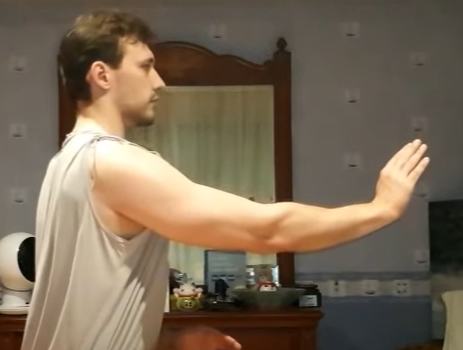
Systema, as it’s often presented today, is a grab bag of striking, grappling, and breathing exercises. You’ll find schools teaching flowing movements (sometimes looking like interpretive dance with a hint of danger), pressure point manipulations (which might leave you more tickled than incapacitated), and unorthodox striking techniques (that could either knock you out or leave you wondering if you accidentally wandered into a slapstick comedy). However, the true essence of Systema Kadochnikova, the original recipe, is far more subtle and profoundly different. It was never intended as a codified martial art, but rather a philosophy of self-discovery and adaptation within the context of combat. Think less “karate kid” and more “existential warrior.”
Developed by Alexei Alexeyevich Kadochnikov, a Soviet engineer and military scientist (because who doesn’t want a scientist designing their fighting style, right?), this approach stemmed from rigorous scientific study rather than traditional martial arts lineage. Kadochnikov’s work focused on understanding the biomechanics of human movement (making sure you don’t accidentally pull a muscle while trying to defend yourself), the psychology of stress in combat (because panicking never helps), and even the influence of brainwave states on performance (getting your brain on board with the whole “not getting punched” thing). It wasn’t about learning specific techniques, but about cultivating an understanding of fundamental principles that could be applied in any combative situation. It’s like learning the grammar of fighting, not just memorizing phrases.
A crucial element of Systema, often overlooked in modern interpretations (probably because it’s less flashy than throwing a spinning back kick), is the profound importance of breathing. Breathing is not just about supplying oxygen to the muscles (although that’s a nice bonus); it’s a powerful tool for regulating the nervous system (keeping you from turning into a jittery mess), managing stress (so you don’t spontaneously combust in a tense situation), and even influencing brainwave activity (turning your brain into a finely tuned fighting machine… or at least a slightly less panicky one). In combat, where fear and adrenaline can overwhelm the mind and body (turning you into a human sprinkler of sweat), controlled breathing becomes essential for maintaining composure and optimal performance.
Here are a few basic breathing exercises often associated with Systema principles:
- Abdominal Breathing (Diaphragmatic Breathing): This involves breathing deeply into the abdomen, allowing the diaphragm to expand and contract fully. Place a hand on your stomach and another on your chest. As you inhale, your stomach should rise while your chest remains relatively still. As you exhale, your stomach should fall. This type of breathing promotes relaxation, reduces heart rate, and improves oxygen intake. (It’s like giving your insides a gentle massage.)
- Wave Breathing: This involves a smooth, continuous flow of breath, like a wave. Inhale deeply into the abdomen, then allow the breath to flow up into the chest, filling the lungs completely. Exhale in the same smooth manner, first emptying the chest and then the abdomen. This exercise helps to regulate the rhythm of breathing and promotes a sense of calm. (Imagine you’re a majestic ocean, not a gasping fish.)
- Holding the Breath (with Control): Brief, controlled breath holds can be used to manage stress and increase focus. After a full inhale, hold the breath for a few seconds before exhaling slowly. This exercise can help to build resilience to stress and improve the body’s ability to function under pressure. (Important disclaimer: Don’t hold your breath until you turn blue. We’re aiming for resilience, not a trip to the hospital.)
The connection between breathing and brainwaves is a key aspect of Systema’s philosophy. Different breathing patterns can influence the activity of different brainwave frequencies. For example, slow, deep abdominal breathing can promote alpha waves, which are associated with relaxation and a focused, meditative state (perfect for calmly assessing the situation before… you know… things get punchy). In contrast, rapid, shallow breathing, often associated with stress, can promote beta waves, which are linked to heightened alertness and anxiety (which is great for spotting danger, but not so great for making rational decisions).
By consciously controlling their breathing, practitioners can influence their mental state and perception of reality in combat. This can translate to improved focus, faster reaction times, better decision-making, and a greater ability to manage pain and fear. In essence, breathing becomes a tool for accessing and optimizing the body’s natural resources in high-stress situations. (It’s like having a superpower, but instead of shooting lasers, you just breathe really well.)
The core idea of Systema is that a skilled fighter doesn’t simply learn techniques; they learn to adapt themselves. This adaptation occurs on multiple levels: (and so on, as in the previous response).
My own journey with Systema began with a year of dedicated training in one of these modern schools. While I learned some valuable movement principles and exercises (and a few questionable dance moves), I felt a disconnect. It wasn’t until I delved deeper into the history and philosophy of Kadochnikov’s work that I began to understand its true potential. I continue to research, practice, and explore these principles, integrating them into my existing martial arts knowledge. This ongoing process has enriched my understanding of combat far beyond simply learning new techniques. It’s about understanding myself within the context of combat, adapting and evolving to become a more complete martial artist. The true Systema Kadochnikova is not a collection of techniques, but a lifelong journey of self-discovery, deeply intertwined with the conscious control of breath. (And hopefully, a few laughs along the way.)
Q&A: What is Systema Kadochnikova
History and Philosophy:
- Q: What exactly is Systema Kadochnikova? Is it a martial art?
- A: This is a key point of misunderstanding. Systema Kadochnikova, as originally conceived by Alexei Kadochnikov, is not a martial art in the traditional sense. It’s more accurately described as a scientific and philosophical approach to human movement, biomechanics, psychology, and stress management, especially within the context of combat.
- Q: How did Systema Kadochnikova originate?
- A: It was developed by Alexei Alexeyevich Kadochnikov, a Soviet engineer and military scientist. His work was based on rigorous scientific research into human physiology, psychology, and biomechanics, rather than traditional martial arts lineages.
- Q: What’s the difference between Systema Kadochnikova and the “Systema” I see taught in many schools today?
- A: Many modern interpretations of “Systema” have evolved into more codified martial arts, with specific techniques and curricula. While they may draw some inspiration from Kadochnikov’s work, they often deviate from the original focus on individual adaptation and the underlying scientific principles. This commercialization has led to much of the misunderstanding surrounding the true nature of Systema Kadochnikova.
- Q: If it’s not a martial art, what is the core focus of Systema Kadochnikova?
- A: The core focus is on understanding and optimizing human potential under stress. This involves developing heightened awareness, fluid movement, efficient biomechanics, psychological resilience, and the conscious control of breath. It’s about adapting oneself to any situation, rather than relying on pre-learned techniques.
Breathing and its Importance:
- Q: Why is breathing so central to Systema Kadochnikova?
- A: Breathing is not just about oxygen intake; it’s a powerful tool for regulating the nervous system, managing stress, and influencing brainwave activity. In high-stress situations like combat, controlled breathing is crucial for maintaining composure, focus, and optimal performance.
- Q: What are some basic breathing exercises associated with Systema principles?
- A: Some common exercises include abdominal (diaphragmatic) breathing, wave breathing (a smooth, continuous flow of breath), and controlled breath holds (practiced with caution). These exercises help to regulate the rhythm of breathing, promote relaxation, and build resilience to stress. It’s important to emphasize that breath holds should never be pushed to the point of discomfort or dizziness.
- Q: How does breathing relate to brainwave activity in Systema?
- A: Different breathing patterns can influence brainwave frequencies. Slow, deep abdominal breathing can promote alpha waves, associated with relaxation and focus, while rapid, shallow breathing (associated with stress) can promote beta waves. By consciously controlling their breath, practitioners can influence their mental state and perception.
Misconceptions and Clarifications:
- Q: Can I learn Systema Kadochnikova from online videos or books alone?
- A: While resources like videos and books can provide valuable information, understanding the nuances of Systema Kadochnikova often benefits from guidance from someone who has a deep understanding of the principles. However, the core concepts of breathwork, self-observation, and awareness can be explored independently.
- Q: I’ve heard Systema involves a lot of “no-touch knockouts.” Is that true?
- A: This is a common misconception perpetuated by some modern interpretations. While Systema principles can lead to highly effective outcomes, the emphasis is on understanding biomechanics and efficient movement, not on mystical or supernatural abilities, hypnosis using breath work and the power of suggestion do take part in higher level of systema though.
- Q: Does Systema Kadochnikova teach specific fighting techniques?
- A: Not in the same way as traditional martial arts. It provides a framework for understanding movement, psychology, and breath, allowing individuals to adapt and respond to any situation. It’s about developing principles, not memorizing techniques.
Leave a Reply