
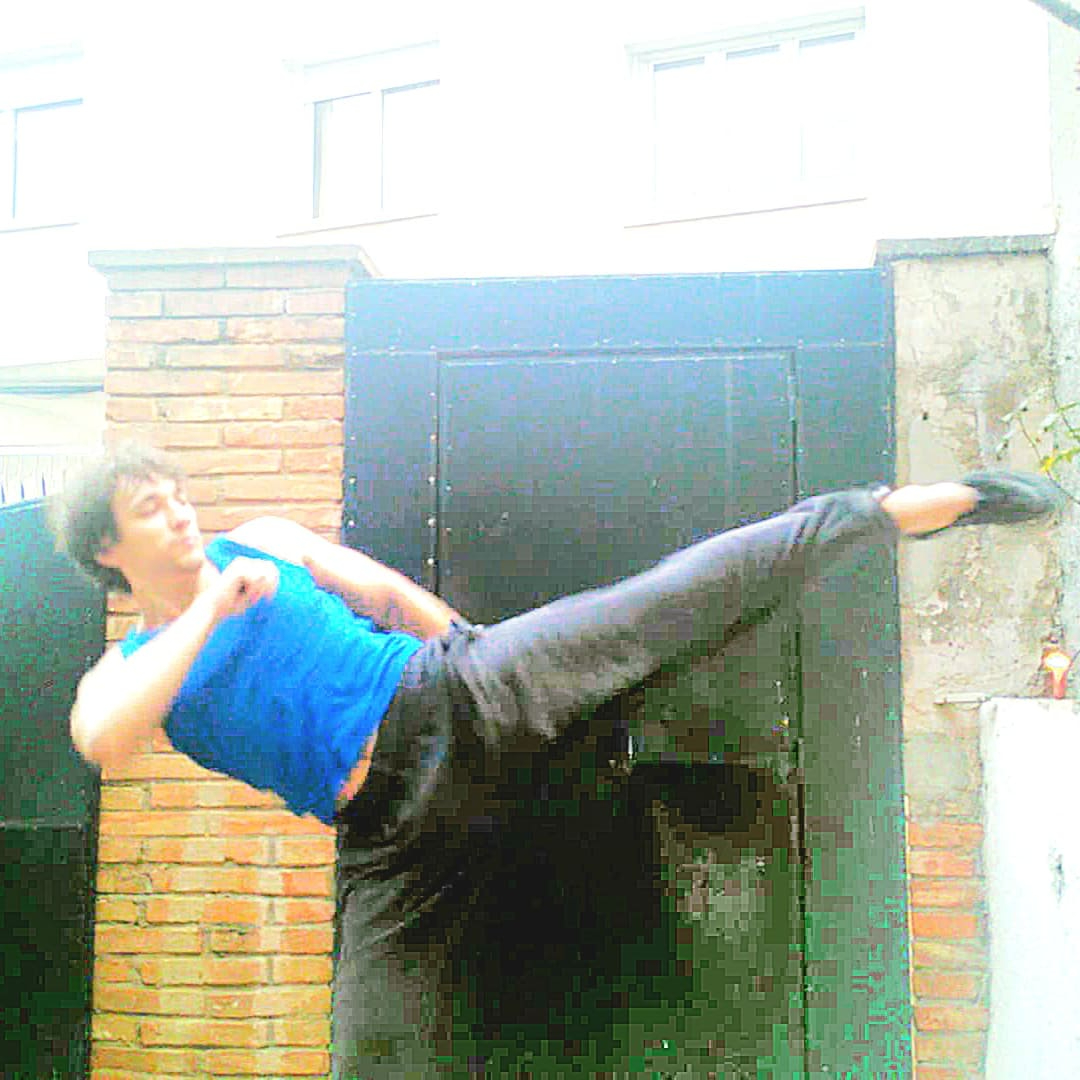
So, you want to learn some martial arts basics right here in your living room? Fantastic! First things first, let me say this… no, you don’t need to turn your home into a high-tech dojo with punching bags hanging from the ceiling (though that would be pretty cool). All you need is some open space, a pinch of motivation, and the willingness to embrace a bit of awkwardness as you start. Trust me, we’ve all been there. Now, let’s get started!
This article will especially benefit complete beginners who always wanted to try martial arts but didn’t have a chance to try, however I believe even more experienced people could get something out of it, as a tree can only grow as big as its roots allow. There is nothing more important than the fundamentals!
Step 1: Warm Up Like a Pro
Before you unleash your inner Bruce Lee, let’s get your body warmed up. Think of this as priming your engine before hitting the gas. Here’s a simple warm-up routine to get your blood flowing:
- Arm Circles (1 minute): Small circles forward, then backward. You’re loosening up those shoulders for punches.
- Leg Swings (30 seconds per leg): Hold onto a wall for balance and swing each leg forward and back. You’re warming up for those epic kicks.
- Torso Twists (1 minute): Stand with feet shoulder-width apart, twist your upper body left and right. Pretend you’re winding up for a big hook punch.
- High Knees (1 minute): Jog in place, lifting your knees high. Bonus points if you imagine yourself dodging invisible strikes.
- Wrist and Ankle Rotations (30 seconds each): These small joints need love too. Circle them gently to avoid any surprises later.
Now that you’re all warmed up and feeling like a champion (or at least not stiff), let’s move on.
Step 2: Stretching – Because Flexibility is Key
Stretching isn’t just for yogis. If you want those punches to flow and those kicks to soar, stretching is your best friend. Here are a few simple stretches:
- Hamstring Stretch: Sit on the floor, extend one leg, and reach for your toes. Hold for 20-30 seconds per side. It’s like asking your legs politely to behave during kicks.
- Quadriceps Stretch: Stand, hold onto something for balance, and pull one foot toward your butt. Switch sides. Simple, effective.
- Shoulder Stretch: Pull one arm across your chest, hold with the other hand. Great for punching prep.
- Hip Opener: Sit cross-legged (or in a butterfly stretch) and gently press your knees down. Say hello to better mobility for kicks.
Step 3: Basic Punches
We’re starting simple. No need to try spinning punches on Day 1. Let’s break these punches down:
- Jab:
- Setup: Stand with feet shoulder-width apart, dominant foot slightly back. Keep your fists at chin level.
- Execution: Extend your lead hand straight out, keeping your elbow close to your body. Your fist should rotate so that your palm faces down at full extension.
- Key Tip: Snap it back as quickly as you throw it. Think of it as a quick poke, not a push.
- Cross:
- Setup: Same stance as the jab, but now the power comes from your rear hand.
- Execution: Rotate your back foot and hips as you throw the punch, extending your rear hand straight forward.
- Key Tip: The rotation adds power. Imagine squashing a bug under your rear foot as you pivot.
- Hook:
- Setup: Start with your fists up and elbows in tight.
- Execution: Twist your torso and lead foot as you swing your lead fist in a horizontal arc. Aim to hit with the front of your knuckles.
- Key Tip: Keep your elbow bent at 90 degrees and your other hand guarding your face.
- Uppercut:
- Setup: Stay in your stance with knees slightly bent.
- Execution: Dip your rear shoulder slightly, then drive your fist upward in a tight arc. Aim for under the chin or midsection (imaginary target!).
- Key Tip: Keep the motion compact. No wild swings—it’s all about precision and power.
- Classical Karate Punch (Candle Training):
- Setup: Prepare the candle, assume a traditional karate stance with one fist chambered at your hip and the other ready to strike. Candle training is really efficient if done right.
- Execution: Punch straight out, aiming to generate enough force and precision to extinguish a candle’s flame without touching it.
- Key Tip: Focus on speed, control, and breath control. Imagine your punch slicing through the air like a blade.

Start with 5-10 of each punch, slow and steady. As you get comfortable, increase the speed and reps. Don’t forget to keep your hands up—pretend you’re guarding your snacks from a hungry roommate.
Step 4: Basic Kicks
Now, let’s get those legs involved! Kicks might feel tricky at first, but practice makes perfect. Here’s how to nail them:
- Front Kick:
- Setup: Stand with your feet shoulder-width apart, hands up in guard.
- Execution: Lift your knee up high, then snap your leg forward, striking with the ball of your foot. Retract your leg immediately after striking.
- Key Tip: Think of it like pushing open a stubborn door.
- Side Kick:
- Setup: From the same stance, pivot on your supporting foot so your hips turn sideways.
- Execution: Lift your knee to your chest, then extend your leg straight out to the side. Aim to hit with your heel.
- Key Tip: Keep your body aligned, don’t lean too far forward or backward.
- Roundhouse Kick:
- Setup: Start with your lead foot pointing forward and your rear foot slightly angled.
- Execution: Swing your rear leg in a circular motion, pivoting on your lead foot. Aim to strike with the top of your foot or shin.
- Key Tip: Use your hips for power. Think of your leg as a baseball bat.

Begin with 5 kicks per leg per type. As your balance and strength improve, aim for 10 or more reps. Focus on control before speed.
Step 5: Combining Movement
Now that you’ve mastered stationary strikes, let’s add some movement:
- Forward Step Punch: Step forward with your lead leg while throwing a jab.
- Backward Step Punch: Step back with your rear leg while throwing a cross. Great for practicing retreating while staying on the offensive.
- Kicks from Sitting: If you’re feeling adventurous, try kicking from a seated position on the floor. It’s excellent for building leg strength and control.
Do 3-5 reps of each, and feel free to mix punches and kicks together. Remember, slow is smooth, and smooth becomes fast.
Step 6: Conditioning
Conditioning is your secret weapon. Start simple with these:
- Plank (20-30 seconds): Builds core strength, which is crucial for all strikes.
- Push-Ups (5-10 reps): Strengthens your arms and chest for better punches.
- Squats (5-10 reps): Builds leg power for those devastating kicks.
Add 1-2 reps or 5 seconds every few days. You’ll thank yourself later.
Remember, Rome wasn’t built in a day, and neither are martial arts skills. Start small, stay consistent, and don’t beat yourself up if your moves feel awkward at first. We all look a little goofy when we’re learning—embrace it!
Oh, and don’t forget to hydrate. Water is the unsung hero of every workout. Now, go forth and punch (and kick) your way to glory, just don’t knock over any lamps in the process!
In the next articles I will go deeper into the conditioning part, as it can get very robust and customizable as you gradually get stronger.
Q&A: Basics of Striking
For Beginners:
- Q: I’m completely new to martial arts. Is it possible to learn striking effectively at home?
- A: Yes! While a live instructor is ideal, you can build a strong foundation in striking at home by focusing on proper form, basic techniques, and consistent practice. This article provides a great starting point.
- Q: What are the most important things to focus on when starting striking training at home?
- A: Focus on proper stance, basic punches (jab, cross, hook, uppercut), and basic kicks (front kick, roundhouse kick). Prioritize correct form over power at first. It’s better to do a perfect technique with less power than a sloppy one with more force.
- Q: I don’t have any equipment like heavy bags. Can I still practice striking?
- A: Again, Yes! Shadowboxing (practicing strikes in the air) is an excellent way to develop technique, speed, and footwork. You can also use pillows, rolled-up towels, or even a sturdy wall for light contact drills once you have the basic form down.
- Q: How do I know if I’m doing the techniques correctly without an instructor?
- A: Filming yourself is crucial here, at at least practicing in front of a mirror. Compare your form to videos of professional fighters or instructors performing the same techniques. Pay attention to details like foot placement, hip rotation, and arm position.
For All Levels (Beginners and More Experienced):
- Q: How important is stance in striking?
- A: Stance is the foundation of all striking. A good stance provides balance, mobility, and power generation. Without a solid stance, your strikes will lack effectiveness and you’ll be more vulnerable to counter-attacks.
- Q: What’s the best way to develop power in my strikes at home?
- A: Focus on proper technique and body mechanics. Power comes from using your entire body, not just your arms or legs. Practice drills that emphasize hip rotation, core engagement, and weight transfer. Once your technique is solid, you can start incorporating resistance training or heavy bag work (if you have the equipment).
- Q: How can I improve my speed and accuracy at home?
- A: Shadowboxing is excellent for developing speed and fluidity. Focus on smooth, controlled movements and try to visualize hitting a target. For accuracy, you can try candle training.
- Q: How often should I practice striking drills?
- A: Consistency is key. Even short, regular sessions (15-30 minutes, several times a week) are more effective than infrequent, long sessions. As you progress, you can gradually increase the duration and intensity of your training.
- Q: What are some common mistakes to avoid in striking?
- A: Common mistakes include telegraphing your strikes (giving away your intentions), dropping your hands (leaving yourself open to counter-attacks), and overextending your strikes (leaving yourself off balance).
- Q: How can I incorporate footwork into my home striking practice?
- A: Combine your striking drills with basic footwork movements like shuffles, pivots, and lateral steps. This will help you develop coordination, mobility, and the ability to close and maintain distance effectively.
- Q: I’m getting bored with the same drills. How can I keep my training interesting?
- A: Vary your drills, try different combinations, and incorporate visualization or mental training. You can also look for online resources or follow along with instructional videos to learn new techniques and drills.
- Q: How can I safely practice power strikes at home without a heavy bag?
- A: Resistance bands can be used to add resistance to your shadowboxing drills, helping you develop power without needing a heavy bag. You can also practice controlled strikes against a sturdy wall or a well-padded surface, focusing on proper form and impact.
Leave a Reply