
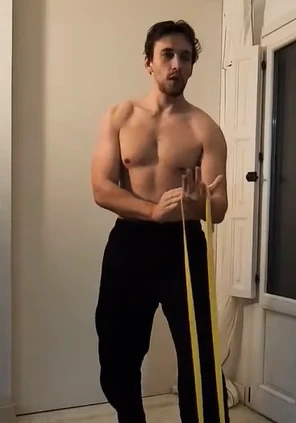
When it comes to martial arts, especially fluid styles like Baguazhang and Systema Kadochnikova, stepping techniques are the secret sauce that ties everything together. While footwork drills teach speed, coordination, and stamina, stepping techniques focus on precision, balance, and intention. They’re not just about moving your feet, they’re about moving your entire body as a unified whole.
In this article, I’ll dive deeper into the stepping techniques you should know, their significance, and detailed instructions to help you start mastering them.
Why Stepping Techniques Matter
Stepping techniques are foundational because they allow you to:
- Maintain Balance: Good stepping keeps you stable, even during rapid transitions or explosive movements.
- Generate Power: In Baguazhang, stepping is the foundation for circular energy generation, also known as Fajin. Mastering is essential to develop the power to perform one inch punch. In Systema, it helps you maintain seamless movement and power flow.
- Evade and Position: Precise stepping lets you evade attacks and position yourself to counter effectively.
- Conserve Energy: Efficient stepping reduces unnecessary movement, saving energy for critical moments.
These techniques transform raw agility developed by footwork drills into refined, purposeful movement. Together, they create a complete system of martial movement.
Beginner Stepping Exercises in Detail
1. Basic Forward Step
This is the most fundamental stepping exercise, teaching balance and weight transfer.
- How to Practice:
- Start in a natural stance with your feet shoulder-width apart.
- Lift one foot slightly off the ground and step forward.
- Place the heel of the stepping foot down first, then roll onto the ball of the foot.
- As the foot lands, smoothly transfer your weight onto it, keeping your back straight.
- The trailing foot follows by stepping forward into the starting position.
- What to Focus On:
Keep the movement slow and controlled. Avoid “stomping” or landing heavily, as this disrupts balance and energy flow.
2. Sliding Step (Glide)
Sliding steps train smooth, grounded movement essential in Baguazhang.
- How to Practice:
- Begin in a low stance (feet wider than shoulder-width, knees bent).
- Push off the ball of one foot and slide the other foot forward.
- Keep the sliding foot as close to the ground as possible without lifting.
- Avoid bouncing—your head should stay at the same level throughout.
- What to Focus On:
This exercise reinforces stability while moving. You’ll feel it in your thighs and calves—think of it as squats in motion!
3. Step-and-Turn Drill
This is where stepping becomes dynamic, introducing direction changes.
- How to Practice:
- Step forward with one foot and plant it firmly.
- Pivot on the ball of that foot, rotating your body to face 90 or 180 degrees in a new direction.
- Let your back foot naturally follow to complete the turn.
- Repeat, alternating directions with each step.
- What to Focus On:
Maintain balance throughout the pivot. Keep your movements smooth, as if tracing a circle on the floor.
4. Circle Walking (Baguazhang Specialty)
Circle walking is a signature exercise of Baguazhang, training you to move gracefully while maintaining a stable center of gravity.
- How to Practice:
- Imagine a large circle on the ground.
- Stand at one point on the circle, facing its center.
- Cross one foot over the other, stepping along the curve of the circle.
- Keep your upper body upright and your gaze fixed toward the circle’s center.
- Continue stepping, alternating directions after completing a few laps.
- What to Focus On:
Aim for smooth, deliberate steps. This exercise develops rotational power and balance.
5. Soft Step (Systema Precision)
Soft stepping enhances your sensitivity to the ground, helping you move stealthily and efficiently.
- How to Practice:
- Stand naturally with your knees slightly bent.
- Step forward lightly, placing your toes on the ground first, followed by the ball of your foot, then your heel.
- Avoid shifting your full weight onto the stepping foot until you feel stable.
- Repeat, moving forward, backward, and side to side.
- What to Focus On:
Imagine walking on thin ice, every step should be deliberate and controlled.
Stepping Techniques and Footwork Drills: A Perfect Pair
Stepping techniques refine the skills developed by footwork drills. For example:
- Coordination: Footwork drills build the ability to move quickly, while stepping techniques add precision and fluidity.
- Balance: Footwork drills focus on dynamic movement, while stepping ensures stability during transitions.
- Efficiency: Footwork provides endurance, while stepping teaches energy conservation through purposeful movement.
By practicing stepping techniques alongside footwork drills, you develop a well-rounded ability to move with speed, control, and intent.
Personal Thoughts on Stepping Practice
When I started stepping drills, I thought, “How hard can it be to step properly?” Turns out, stepping with intention and precision is a whole new level of complexity. My first few circle-walking attempts looked more like a wobbly chicken dance than martial mastery. But as I practiced, the movements became smoother, and I began to feel the connection between my legs, core, and upper body.
Stepping techniques don’t just make you a better martial artist; they make you move like one. There’s a quiet confidence in knowing that every step you take has a purpose.
Stepping techniques are the bridge between theory and action in martial arts. They take the agility and stamina you develop with footwork drills and turn them into precise, efficient, and powerful movements.
Whether you’re practicing the circular elegance of Baguazhang or the smooth fluidity of Systema Kadochnikova, stepping techniques will elevate your skills to new heights. Start with the basics, stay consistent, and enjoy the journey, your balance, power, and martial understanding will thank you.
And remember: it’s not about how many steps you take, it’s about how purposeful they are. Now go practice, and don’t worry if you look a little silly at first, mastery is just a few thousand steps away.
Q&A: Stepping Techniques
- Q: What makes stepping so important in Baguazhang and Systema?
- A: In both Baguazhang and Systema, stepping isn’t just about moving; it’s the foundation of generating power, maintaining balance, and controlling space. Baguazhang’s circular stepping creates continuous motion and opportunities for attack, while Systema’s diverse steps facilitate adaptability and efficient movement in dynamic situations.
- Q: I’m new to both styles. Which should I focus on first, the stepping or the hand techniques?
- A: Stepping is fundamental. Without a solid understanding of the footwork, the hand techniques won’t be as effective. Focus on mastering the basic stepping patterns and principles before integrating complex hand movements.
- Q: How do the stepping methods differ between Baguazhang and Systema?
- A: Baguazhang emphasizes circular stepping around a central point, generating spiraling power. Systema utilizes a wider range of steps, including linear, diagonal, and shifting movements, prioritizing adaptability and reacting to changing circumstances. While different, both emphasize natural, efficient movement.
Practice and Drills Questions:
- Q: Can I effectively practice these stepping techniques at home without a partner?
- A: Absolutely. Many footwork drills, such as circle walking for Baguazhang or basic step patterns for Systema, can be practiced solo. This allows you to focus on developing proper form, balance, and coordination.
- Q: How much space do I need for home practice?
- A: For Baguazhang’s circle walking, a clear circular area is ideal, but even a smaller space can be adapted by adjusting the circle’s size. Systema’s stepping drills often require less continuous space and can be practiced in a hallway or small room.
- Q: How often should I practice these stepping drills?
- A: Consistency is key. Short, regular practice sessions (15-30 minutes, several times a week) are more effective than infrequent, long sessions.
- Q: What are some common mistakes beginners make when learning these steps?
- A: In Baguazhang, common mistakes include leaning excessively, losing balance, and not maintaining a consistent circle. In Systema, beginners may struggle with maintaining fluidity and adapting their steps to different situations.
- Q: How can I track my progress while practicing at home?
- A: Filming yourself with your phone is a great way to identify flaws in your posture. You can also focus on maintaining consistent rhythm, smooth transitions, and proper posture during your drills.
Application and Advanced Concepts Questions:
- Q: How can I combine these stepping techniques with other martial arts I practice?
- A: The principles of efficient movement, balance, and adaptability learned through Baguazhang and Systema stepping can enhance any martial art. Consider how these principles can improve your footwork, power generation, and overall movement in your other disciplines.
- Q: How do these stepping techniques translate to actual combat or self-defense?
- A: In Baguazhang, the circular stepping allows you to generate power from the ground up, create angles of attack, and evade opponents. In Systema, adaptable stepping allows you to control distance, maintain balance under pressure, and react to changing circumstances.
- Q: I’m an experienced martial artist. How can these drills benefit me?
- A: Even advanced practitioners can benefit from revisiting the fundamentals. These drills can refine your movement, improve your efficiency, and help you identify and correct any ingrained bad habits. They can also enhance your understanding of the underlying principles of movement and body mechanics.
- Q: How does breathing connect to stepping in these styles?
- A: In both Baguazhang and Systema, breath control is crucial for coordinating movement, generating power, and maintaining relaxation under pressure. Coordinating your breath with your steps enhances fluidity and efficiency.

Leave a Reply