
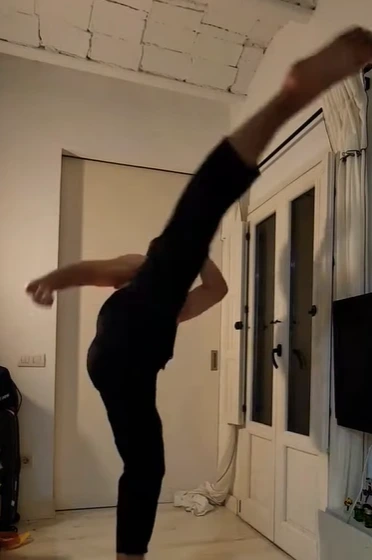
So, the dojo’s closed, your sparring partner’s on vacation in Bali (without you, the nerve!), or maybe the idea of battling traffic just to get kicked in the shins isn’t your idea of a good time. Whatever the reason, you’re looking to hone your martial arts skills within the hallowed (or cluttered) halls of your own home. Fear not, aspiring warrior!
Training martial arts solo at home isn’t just possible, it can be a surprisingly effective, and often hilariously awkward, journey of self-improvement. This guide will be your sensei, showing you how to practice martial arts alone, at home, without a partner, and by yourself, because let’s face it, those all mean the same thing when you’re staring at your reflection in the microwave.
The Underrated Power of Solo Training (Even When You’re Not a Lone Wolf)
Even if you’re a dedicated dojo rat or have a regular training buddy, solo practice is the secret ingredient to leveling up your martial arts game. It’s where the real magic happens, allowing you to:
- Become Intimate with the Fundamentals: Solo practice allows you to dissect and repeat basic techniques countless times, building that crucial muscle memory. It’s where those teetering stances become rock-solid, and where your kicks finally stop resembling a drunken giraffe.
- Embrace Your Own Rhythm: No more pressure to keep pace with a faster or more experienced partner. You set the tempo, allowing you to linger on challenging techniques until they become second nature. Polishing your basic martial arts strikes until achieving perfection. This personalized approach is invaluable for mastering the nuances of your chosen art.
- Transform Your Living Space into a Personal Dojo: Forget battling rush hour or rearranging your schedule. Your living room, garage, backyard (weather permitting, of course,nobody wants to practice kicks in a blizzard), or even a spare bedroom becomes your personal training sanctuary, accessible whenever inspiration (or sheer boredom) strikes.
Creating Your Home Dojo, aka Operation: Furniture Relocation
Before you start throwing kicks and punches, you need to establish your training ground. I’m not suggesting you install a sprung floor and a full-length mirror (although, if you have the space….go for it!), but a clear area of roughly 6×6 feet will usually suffice. Here’s your pre-training checklist:
- The Great Furniture Migration: This is non-negotiable. You absolutely do not want to recreate my infamous incident with my grandmother’s (thankfully replica) antique vase. I was practicing a spinning back kick, fully immersed in my warrior fantasy, when…..crash. Let’s just say my cat, Mr. Whiskers, has never looked more judgmental.
- Footing is Key: A stable, non-slip surface is crucial for preventing injuries. Carpet can work for some drills, but a hard floor with a yoga mat or, ideally, a martial arts mat provides the best footing.
- Consider the Soundscape: Jumping jacks at 3 AM are rarely appreciated, especially if you share walls. Be mindful of noise levels, particularly if you live in an apartment building. Perhaps invest in some impact-absorbing mats if you plan on doing a lot of jumping or heavy bag work.
How to Practice Martial Arts Alone (The Training Itself)
Now for the fun part: turning your home into a training ground. Let’s break down some effective solo training methods:
- How to practice martial arts alone/by yourself/without a partner:
- Shadowboxing/Forms (Kata/Poomsae/Taolu/etc.): This is the cornerstone of solo martial arts training. During the shadow boxing you practice your strikes, kicks, blocks, and footwork in the air, focusing on proper form, speed, power, and fluidity. Imagine a real opponent in front of you, reacting to your movements. Visualize the entire sequence, from the initial stance to the final strike. I once got so carried away during a particularly intense shadowboxing session that I nearly took out a ceiling fan. Let’s just say it was a close call.
- Heavy Bag Training (If Possible): A heavy bag is an invaluable tool for developing power, speed, and conditioning. It provides a tangible target for your strikes and allows you to practice combinations with realistic resistance. If a heavy bag isn’t an option, get creative! A tightly rolled blanket or even a sturdy pillow (used gently!) can serve as a makeshift target.
- Imaginary Focus Mitt Drills: Even without a partner to hold focus mitts, you can still practice mitt work. Visualize the mitts in front of you and practice your basic strikes and combinations, focusing on accuracy, timing, and footwork. This method is surprisingly effective for refining your technique. You can also apply candle training if you want to have a more visual target. Additionally it is also very good for polishing your striking accuracy.
- How to practice martial arts at home:
- Calisthenics: Your Body as a Gym: Bodyweight exercises are your best friend when training at home. Push-ups, squats, lunges, planks, burpees—the possibilities are endless. These exercises build strength, endurance, and flexibility without requiring any fancy equipment. I personally have a love-hate relationship with burpees. They’re brutal, but they make me feel like I’ve actually accomplished something, even if I’m gasping for air afterward.
- Flexibility and Mobility: The Key to Fluid Movement: Flexibility is absolutely crucial in martial arts. Dedicate time to stretching your muscles, particularly your hips, legs, and shoulders. Regular stretching not only improves your range of motion but also helps prevent injuries. There was that one time I attempted a split after neglecting my stretching routine for a week… the less said about that, the better. Let’s just say I learned my lesson.
- Footwork and Agility Drills: Mastering Movement: Use tape, markers, or even chalk to create lines, squares, or other patterns on the floor. These markers can be used to practice footwork drills, such as shuffles, pivots, and lateral movements. This will improve your agility, balance, and overall movement efficiency.
Keeping it Fresh and avoiding the Solo Training Slump
Training alone can sometimes become monotonous. Here are some strategies to keep your training engaging and prevent boredom from setting in:
- Set Clear and Achievable Goals: Having specific goals, whether it’s mastering a new technique or improving your conditioning, will provide motivation and help you track your progress.
- Curate Your Training Soundtrack: Music can be a powerful motivator. Create a playlist of energetic tunes that get you pumped up and ready to train.
- Vary Your Training Routine: Don’t fall into the trap of doing the same drills every single time. Mix things up, try new combinations, and explore different aspects of your martial art.
- Utilize Online Resources: The internet is a treasure trove of instructional videos and training resources. Use these resources to learn new techniques, refine your form, and stay inspired. Just remember to prioritize safety and proper technique over flashy moves.
- Become Your Own Videographer: Recording your training sessions is an invaluable tool for self-assessment. It can be a bit awkward to watch yourself at first, but it allows you to identify areas for improvement that you might otherwise miss. I once filmed myself attempting a spinning hook kick and discovered I looked more like a startled flamingo than a seasoned martial artist. It was a humbling but valuable experience.
The Most Important Rule is to listen to Your Body
Finally, and perhaps most importantly, listen to your body. If you’re experiencing pain, stop and rest. Don’t try to push through injuries; it will only set you back in the long run. And a word of caution: be mindful of your pets! They might not appreciate being accidentally used as impromptu training dummies. Trust me on this one.
Training martial arts at home alone is a challenging yet incredibly rewarding journey. It demands dedication, self-discipline, and a good sense of humor (especially when things go hilariously wrong). But with the right approach, you can significantly improve your skills, fitness, and overall well-being. So, clear some space, crank up the tunes, and begin your transformation from living room legend to a (slightly less clumsy) solo warrior!
Solo Training Q&A
- Q: I don’t have much space at home. Can I still effectively practice martial arts?
- A: You don’t need a huge space to train at home. A clear area of about 6×6 feet is usually sufficient for most drills. Focus on techniques that don’t require a lot of lateral movement or large equipment. Shadowboxing, forms (kata/poomsae), calisthenics, stretching, and footwork drills can all be done in a relatively small space. You can also get creative with using walls for support or resistance in certain exercises.
- Q: I don’t have any training equipment like a heavy bag or focus mitts. Can I still make progress with solo training?
- A: Yeah, you can definitely make significant progress without equipment. Shadowboxing, forms, calisthenics, and stretching are all highly effective training methods that require no equipment at all. You can also improvise with household items. For example, a rolled-up blanket or a sturdy pillow (used gently) can serve as a makeshift target for strikes.
- Q: How can I stay motivated when training alone at home?
- A: Staying motivated during solo training can be challenging, but there are several strategies you can use:
- Set clear and achievable goals: Having specific targets will help you stay focused and track your progress.
- Create a training schedule: Treat your home training sessions like you would a class at a dojo. Schedule specific times for training and stick to them as much as possible.
- Use music: Create a playlist of energetic music that gets you pumped up.
- Vary your routine: Don’t do the same drills every time. Mix things up to keep your training fresh and interesting.
- Track your progress: Keep a training journal or use a fitness app to track your workouts and monitor your improvements.
- Find an online community: Connect with other martial artists online for support and motivation.
- A: Staying motivated during solo training can be challenging, but there are several strategies you can use:
- Q: How can I ensure I’m performing techniques correctly when I don’t have an instructor to correct me?
- A: Ensuring proper form is crucial, especially when training solo. Here are some tips:
- Record yourself: Filming your training sessions allows you to review your form and identify areas for improvement.
- Review instructional videos: Use reputable online resources to learn proper technique.
- Use mirrors (if possible): A mirror can help you check your posture and alignment.
- Focus on the fundamentals: Master the basics before moving on to more complex techniques.
- A: Ensuring proper form is crucial, especially when training solo. Here are some tips:
- Q: Is it possible to learn a completely new martial art solely through home training?
- A: While you can learn a lot through home training, especially with the abundance of online resources available today, it’s generally recommended to supplement home training with instruction from a qualified instructor, especially for beginners. An instructor can provide personalized feedback, correct your form, and teach you important safety principles. Home training is excellent for reinforcing what you learn in class and for practicing independently, but it’s not a complete replacement for in-person instruction, especially in the initial stages of learning a new martial art.
Leave a Reply